How to choose
Choosing a first guitar that fits the player, not the catalogue
Scale length, nut width and string type decide whether a beginner keeps playing. The measurements that matter, the full first bill, and the rosewood rule.
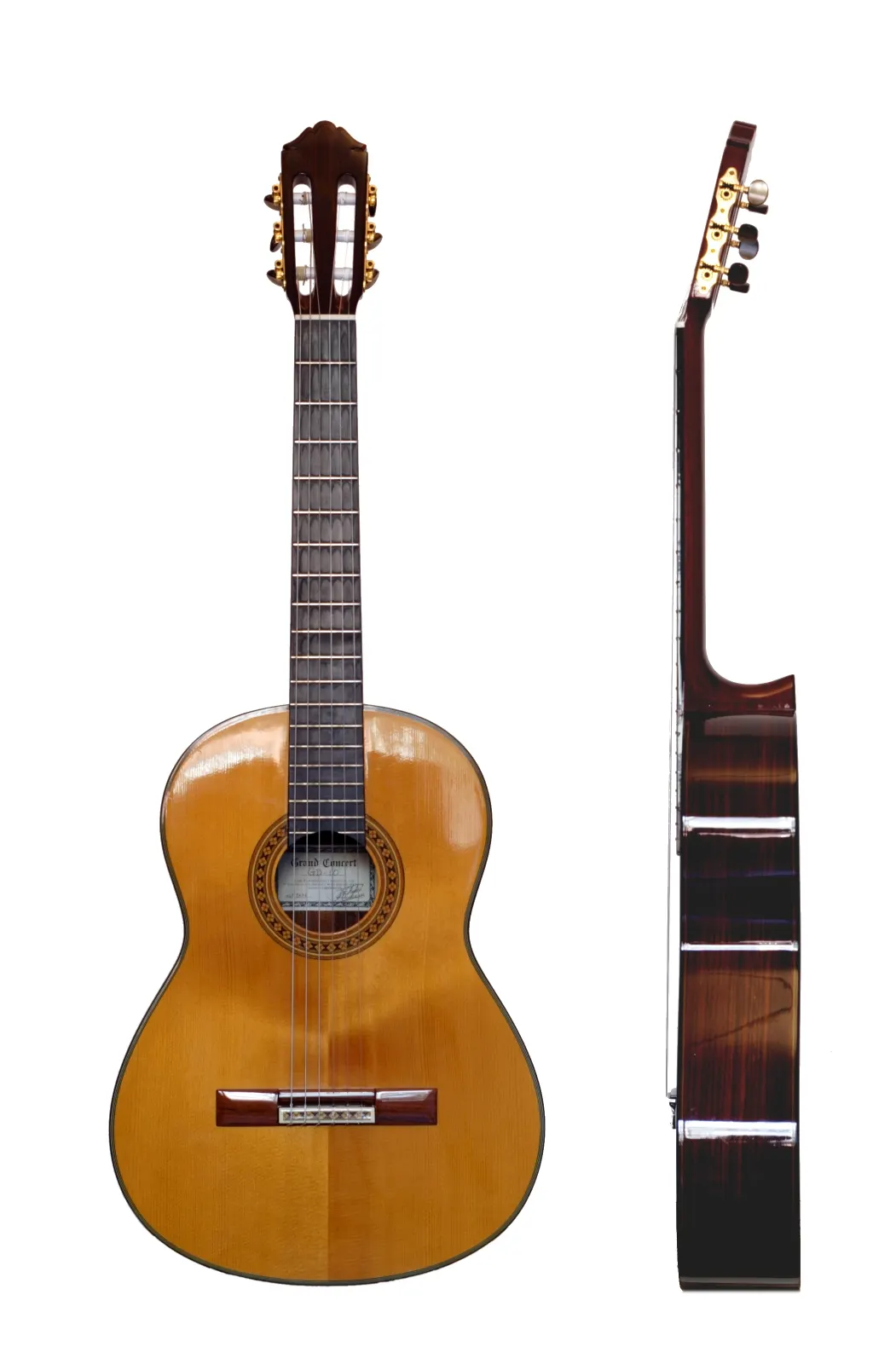
Most abandoned first guitars were not bad guitars. They were the wrong size, strung with the wrong material, or bought without the three or four small items that make an instrument playable on the day it arrives. All of those are decidable before you buy, from numbers the manufacturer publishes.
This guide works through them in the order that affects a beginner: the two measurements that decide reach, the string material that decides whether the first month hurts, the full bill rather than the headline price, and the one international rule that still catches secondhand instruments at a border. Prices below are stated examples, not quotes; this site carries no price feed.
Scale length and nut width are the measurements that decide reach
Scale length is the vibrating length of the string, and it sets how far apart the frets are. One manufacturer's full-size student classical model lists a scale length of 650 mm, a nut width of 52 mm and an overall length of 997 mm. Its 3/4 model lists 615 mm, a nut width of 48 mm and an overall length of 953 mm, with 19 frets and the neck joining the body at the 12th fret. The scale is about 5% shorter and the nut 4 mm narrower.
Four millimetres sounds trivial and is not. The nut width sets how far the first finger has to stretch sideways to hold a barre or to keep a neighbouring string from being muted, and a small hand on a 52 mm nut spends the first month failing at a chord it would make cleanly on 48 mm. The shorter scale also drops string tension at the same pitch, which makes fretting measurably less effortful.
The practical test is better than any age chart. Have the player sit with the instrument in playing position and form a first-position chord. If the fretting hand has to roll the wrist forward to reach, or the strumming arm cannot fall naturally over the body, the instrument is too large regardless of what the player's age is supposed to indicate.
| Specification | Full size | 3/4 size |
|---|---|---|
| Scale length | 650 mm (25.6 in) | 615 mm (24.2 in) |
| Nut width | 52 mm (2 in) | 48 mm (1 7/8 in) |
| Overall length | 997 mm (39 1/4 in) | 953 mm (37 1/2 in) |
| Frets | 19 | 19 |
| Strings as supplied | Nylon, high tension | Nylon, high tension |
615 divided by 650 is 0.946, so the 3/4 scale is about 5% shorter. Other makers publish different figures for the same size names, which is why the specification sheet matters more than the label on the box.
Nylon or steel changes the first month more than the brand does
Nylon strings sit at lower tension and are gentler on untoughened fingertips, which is why classical and flamenco instruments are the usual recommendation for a young beginner or for an adult who can only practise 10 to 15 minutes a day at first. Steel strings are brighter and louder, hold up to a pick, and hurt more for the first two or three weeks until the fingertips adapt.
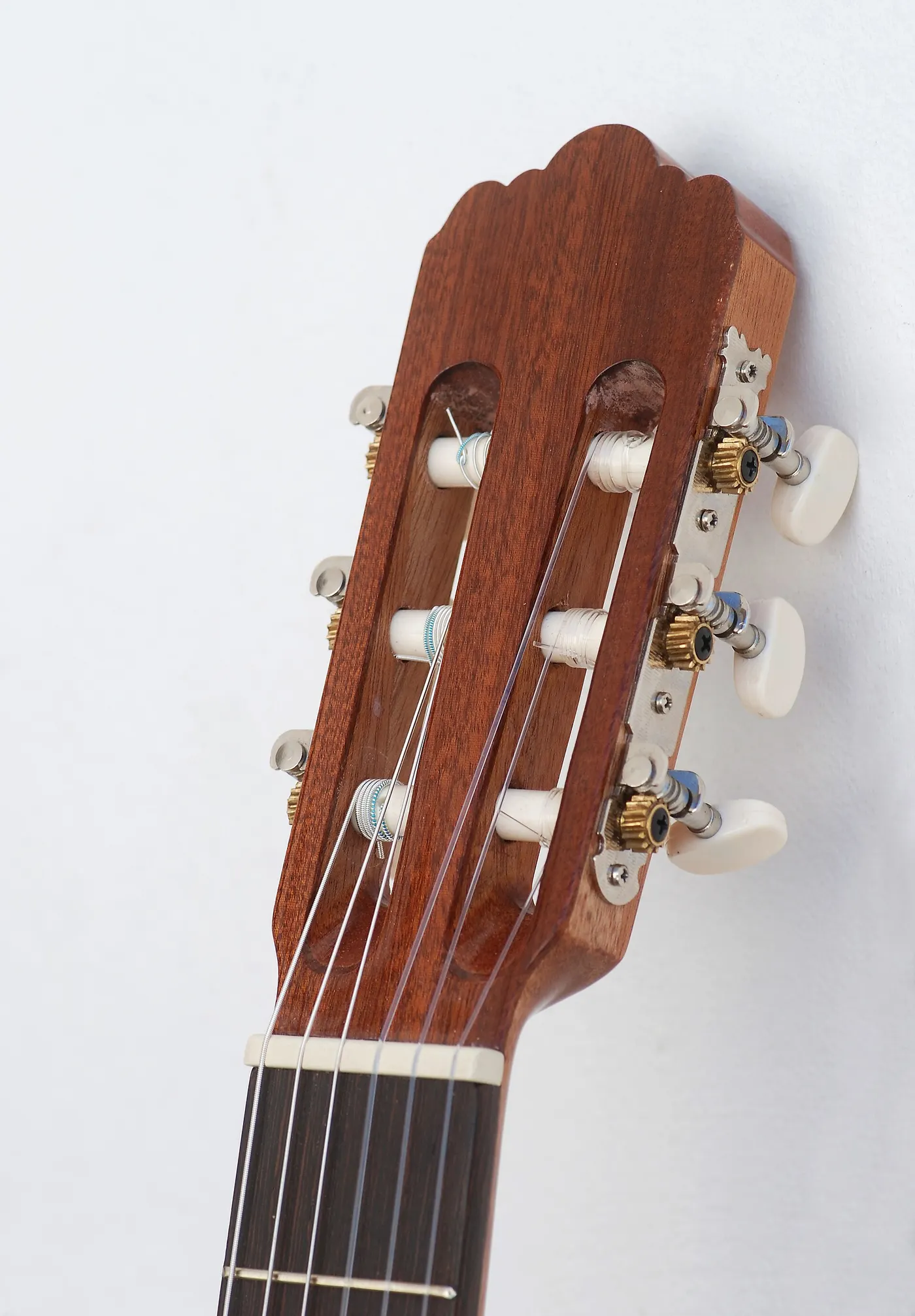
The necks are different shapes as well as different widths. A classical neck is flat and wide — 52 mm at the nut on the model above — which suits fingerstyle and classical repertoire and is awkward for wrapping a thumb over the top to fret a bass note. A steel-string or electric neck is narrower and more curved, which suits chord shapes used in most popular music.
The decision follows the music the player actually wants to make, not the price. Somebody who wants to accompany singing will be frustrated by a wide classical neck; somebody learning from a classical teacher will be handed nylon on the first day. Choosing against the repertoire is the most common way a $220 instrument turns into a $220 ornament.
- Nylon: lower tension, kinder to new fingertips, flat 52 mm neck on a full-size classical, suits fingerstyle and classical study
- Steel acoustic: louder, narrower and more curved neck, two to three weeks of sore fingertips, suits strummed songs
- Electric: lightest string tension of the three, narrow neck, but needs an amplifier and a cable before it makes a sound
- Whichever is chosen, the first set of replacement strings should be the same gauge as the set supplied until the player can hear a reason to change
The full first bill, not the headline price
An instrument on its own is not playable in a house. A clip-on tuner is non-negotiable, because a beginner cannot tune by ear and an out-of-tune guitar teaches the ear wrong. A stand matters more than it looks: an instrument in a case under a bed gets played a fraction as often as one standing in the corner of a room.
On the example prices in the table below, a complete nylon-string starter comes to $320 — a $220 instrument plus $100 of items that make it usable. An electric starter on the same basis comes to $455, because the amplifier and cable add $105 and nothing produces sound without them. That $135 difference is the real gap between the two routes, not the gap between the two instrument prices.
Spare strings are a consumable rather than kit, so they sit in the monthly budget instead. At an example $9 a set changed every 3 months, that is $36 a year, which is about $3 a month — small next to the kit but the line that stops a broken string ending a week of practice.
| Item | Nylon-string starter | Electric starter |
|---|---|---|
| Instrument | $220 | $250 |
| Clip-on tuner | $18 | $18 |
| Stand | $25 | $25 |
| Gig bag | $45 | $45 |
| Strap | $12 | $12 |
| Practice amplifier | not needed | $90 |
| Instrument cable | not needed | $15 |
| Total | $320 | $455 |
Column sums: 220 + 18 + 25 + 45 + 12 = 320, and 250 + 18 + 25 + 45 + 12 + 90 + 15 = 455. The $135 difference is the amplifier, the cable and the higher instrument price together. Put your own figures into the cost-per-year calculator on this site.
Rosewood, borders and secondhand instruments
Guitar fingerboards and bridges are frequently rosewood, and rosewood species in the genus Dalbergia are listed under CITES. The rule that applies to instruments changed at the eighteenth Conference of the Parties, and the U.S. Fish and Wildlife Service notice records that the amendments took effect on November 26, 2019. The revised annotation exempts finished musical instruments, finished musical instrument parts and finished musical instrument accessories from the listing.
A finished musical instrument is defined in the same text as one that is ready to play or needs only the installation of parts to make it playable, and the term includes antique instruments. The same annotation separately exempts finished products containing up to 10 kg of the listed wood per shipment. In practice a playable guitar with a rosewood fingerboard is no longer the permit problem it was before that date.
One species is the exception. Dalbergia nigra, Brazilian rosewood, is listed in Appendix I and still requires documentation, which is the single most important thing to establish before buying a vintage instrument from abroad. Ask the seller which species the fingerboard and the back and sides are, and get it in writing before money moves.
Deciding in five steps
Order matters here. Size first, because it is the only decision that cannot be corrected with an accessory. String type second, because it follows from the music. Budget third, with the whole bill rather than the instrument alone. Everything after that is preference.
If the player is between sizes, choose the smaller instrument. A 3/4 that is outgrown in two years has been played for two years; a full size that cannot be reached is a guitar that was never played at all, and the resale gap between the two outcomes is far smaller than the practice gap.
- Sit the player with the instrument and check a first-position chord can be formed without rolling the wrist
- Compare published scale length and nut width between the candidate sizes rather than trusting the size name
- Choose nylon or steel from the music the player wants to make, not from the price difference
- Price the whole bill — tuner, stand, bag, strap and, for electric, amplifier and cable — before comparing instruments
- For a secondhand instrument shipped from abroad, get the fingerboard and body species in writing first
Before you buy
- Have the player hold the instrument and form a first-position chord before anything is bought
- Write down the published scale length and nut width of both candidate sizes
- Decide nylon or steel from the repertoire the player wants, and keep the supplied string gauge at first
- Add tuner, stand, gig bag and strap to the instrument price before comparing two options
- For an electric, add an amplifier and a cable or the instrument makes no usable sound
- Budget a setup if the string height feels high out of the box
- For a secondhand overseas purchase, confirm the fingerboard species in writing
Questions readers ask
- At what age can a child move to a full-size guitar?
- Reach decides it, not age. Sit the child with the instrument and watch whether a first-position chord can be formed without rolling the wrist forward. The difference between the two sizes on one maker's published figures is 35 mm of scale and 4 mm of nut width, and that is what the hand is actually negotiating.
- Is a cheaper guitar harder to play?
- Usually it is the setup rather than the price. String height at the first and twelfth frets, a properly cut nut and a straight neck are what make an instrument easy, and all three can be adjusted. Budget an example $60 for a setup on a new instrument if the action feels high, and the playability gap with a far more expensive guitar narrows sharply.
- Does a beginner need an amplifier straight away for an electric?
- Yes, because an unamplified electric guitar is too quiet to hear properly and a player cannot judge their own tone or timing. On the example prices here an amplifier and cable add $105, which is most of the $135 difference between the nylon and electric starter bills. A headphone amplifier is the quieter version of the same purchase.
- How often should strings be changed?
- For a beginner practising most days, an interval of about 3 months is a reasonable starting assumption, moved earlier if a string sounds dull or feels gritty. At an example $9 a set that is $36 a year, or about $3 a month. A broken string with no spare in the house is the most common reason a week of practice is missed.
- Can I take a guitar with a rosewood fingerboard abroad?
- The CITES annotation revised with effect from November 26, 2019 exempts finished musical instruments, parts and accessories containing Dalbergia species. The exception is Dalbergia nigra, Brazilian rosewood, which is listed in Appendix I and still requires documentation. Establish which species the instrument uses before travelling or before buying one from overseas.
Sources
- Cordoba Guitars — Protege C1M specifications (650 mm scale length, 52 mm nut width, 997 mm overall length) — checked 2026-11-03
- Cordoba Guitars — Protege C1M 3/4 specifications (615 mm scale length, 48 mm nut width, 953 mm overall length, 19 frets) — checked 2026-11-03
- U.S. Fish and Wildlife Service — Notice to the Wildlife Import/Export Community, Changes to CITES Species Listings, September 9, 2019 (revised Annotation #15 exempting finished musical instruments; effective November 26, 2019) — checked 2026-11-03
Some links on this site can earn us a commission. That does not change which product a guide recommends, and it adds nothing to your price. Advertising is not enabled on this site yet. When it is, ads will be labelled and kept visually separate from the guides.