Safety
Which art-supply label actually means the product was assessed
Conforms to ASTM D-4236, the small parts ban, the 100 ppm lead limit: what each label is required to mean before you buy paints for a child.
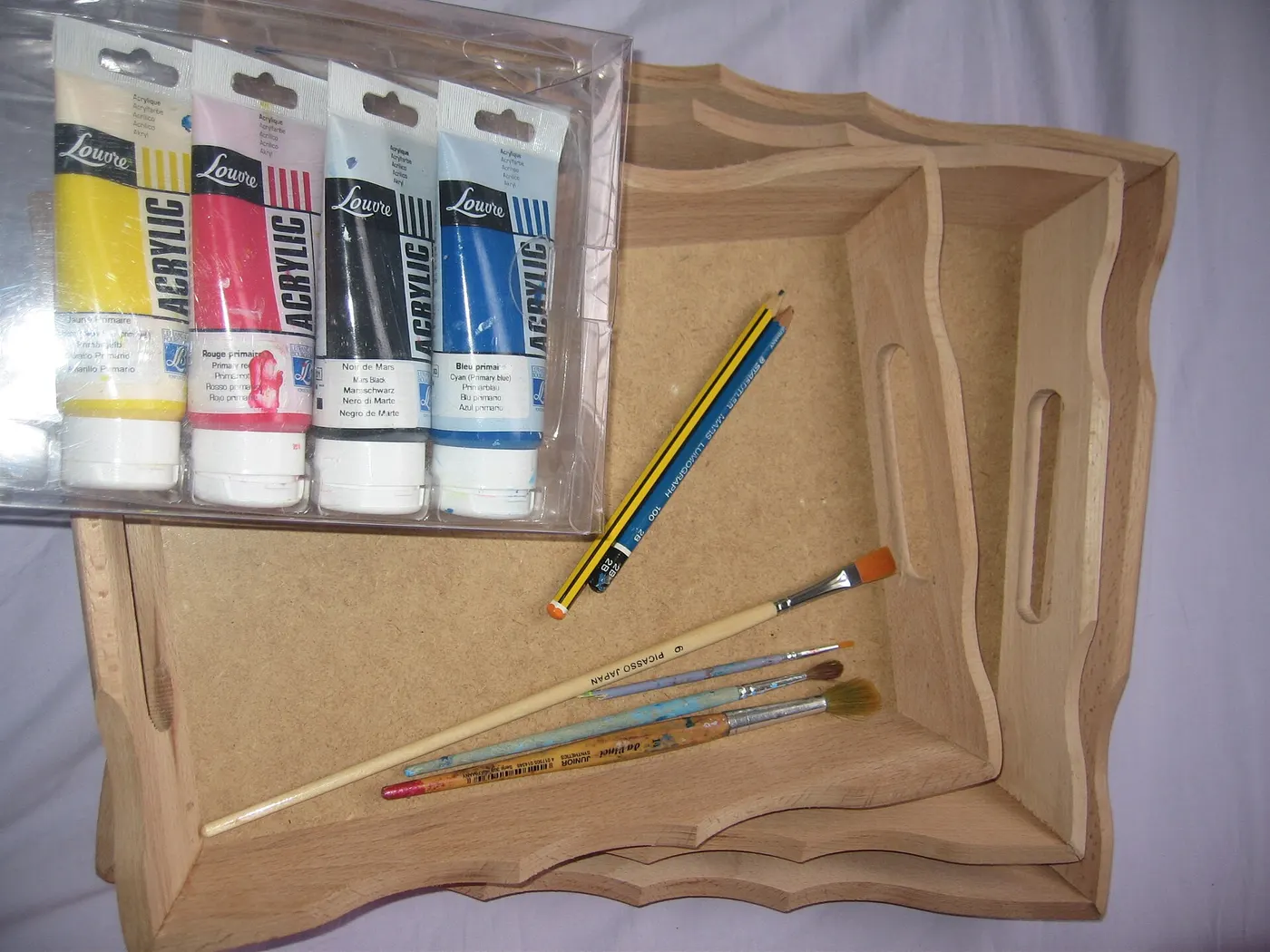
Art supplies for children carry more label text than almost anything else on a shelf, and most of it is marketing. Two phrases have federal requirements behind them, one age threshold changes which rules apply at all, and one number — a lead limit — applies to every accessible part of a children's product regardless of what the front of the box says.
This guide sets out what each is required to mean, with the regulation that imposes it, so you can read a box in about 2 minutes. It describes published federal requirements; it is not a safety assessment of any product, and nothing here has been tested by this site.
What 'Conforms to ASTM D-4236' certifies
The Labeling of Hazardous Art Materials Act is implemented through the Federal Hazardous Substances Act regulations at 16 CFR 1500.14(b)(8). It requires that art materials be reviewed by a toxicologist to determine whether they have the potential to cause chronic adverse health effects, and the Consumer Product Safety Commission states that this toxicological assessment must be carried out every 5 years.
When a product has been through that process, the label may carry a conformance statement in one of several accepted forms: Conforms to ASTM Practice D-4236, Conforms to ASTM D-4236, or Conforms to the health requirements of ASTM D-4236. The statement belongs on the product where that is feasible, and the Commission accepts the package, a display or sign at the point of purchase, or separate explanatory literature as alternatives.
What the statement does not mean is that the product contains nothing hazardous. Materials that do present a chronic hazard are required to carry labelling under the Federal Hazardous Substances Act as well, and the criteria used for the assessment must be submitted to the Commission's Division of Regulatory Enforcement. The conformance statement means the review happened and the required warnings, if any, are present — not that there were none.
| Phrase on the box | Federal requirement behind it | What it does not tell you |
|---|---|---|
| Conforms to ASTM D-4236 | A toxicological assessment under 16 CFR 1500.14(b)(8), repeated every 5 years | That the product contains no hazardous component |
| Chronic hazard warning text | Required labelling under the Federal Hazardous Substances Act where a chronic hazard exists | The exposure level at which the warning applies |
| Non-toxic, used alone | No specific federal labelling requirement attaches to this phrase by itself | Whether any assessment was carried out at all |
| Washable | No federal requirement; it is a performance claim about the surface, not about health | Which surfaces and fabrics it was tested against |
The conformance statement is the phrase to look for on any paint, ink, pastel, solvent or adhesive sold as an art material. Its absence on an art material is the gap worth asking about.
Age 3 is the line where the rules change
A separate set of rules applies to products intended for children under 3 years old. The small parts ban at 16 CFR part 1501 prohibits small parts in those products, with the size criterion set out at 16 CFR 1501.4 and based on a test cylinder that approximates the fully expanded throat of a child under three. Caps, bead kits, small brush ferrules and loose embellishments are the usual failures in an art set.
Labelling obligations sit alongside the ban. Products containing small parts, balloons, small balls or marbles must carry warning labels telling buyers not to purchase them for children below a stated age, under 16 CFR 1500.19, with a parallel requirement for advertising at 16 CFR 1500.20. A craft kit sold for older children is not prohibited from containing small parts; it is required to say so.
This is why the age marking on a craft kit is a regulatory statement and not a difficulty rating. A set marked for ages 8 and up may legitimately contain components that would be banned outright in a set intended for a two-year-old. If younger children share the table, the age marking on the box is the number that decides what comes out of the cupboard.
- Products intended for children under 3 years old are subject to the small parts ban at 16 CFR part 1501
- The size criterion is set out at 16 CFR 1501.4 using a test cylinder sized to a young child's throat
- Small parts, balloons, small balls and marbles trigger the warning-label requirement at 16 CFR 1500.19
- The same warning obligation extends to advertising under 16 CFR 1500.20
- An age marking on a craft kit is a regulatory statement about components, not a judgement about skill

Lead, and the limit that applies to the whole product
All accessible components of a children's product must meet a lead content limit of 100 ppm, a requirement that comes from 15 U.S.C. 1278a rather than from any voluntary programme. It applies to the component, not to the claim on the front of the box, which is why a product labelled non-toxic is not thereby compliant and a product with no such wording is not thereby non-compliant.
Toys more broadly are governed by ASTM F963, which the Commission has made a mandatory consumer product safety standard codified at 16 CFR part 1250. A craft kit for a young child frequently sits under both regimes at once: the art materials inside it under the ASTM D-4236 assessment, and the kit as a whole under the toy standard and the small parts rules.
For a buyer, the practical consequence is that the compliance information worth looking for is a specific citation rather than an adjective. A manufacturer able to tell you which standards a product was certified against is in a different position from one offering only reassurance in marketing language, and that difference is visible on a product page before anything is ordered.
| Component | Rule that applies | Citation |
|---|---|---|
| Paints, inks, pastels, adhesives, solvents | Toxicological assessment and conformance statement | 16 CFR 1500.14(b)(8) |
| Hazard warning text where a chronic hazard exists | Federal Hazardous Substances Act labelling | 16 CFR 1500.121 |
| Small components in a set for a child under 3 years old | Small parts ban | 16 CFR part 1501 |
| Warning labels for small parts, balloons, balls and marbles | Cautionary labelling | 16 CFR 1500.19 and 1500.20 |
| Any accessible component of a children's product | Lead content limit of 100 ppm | 15 U.S.C. 1278a |
| The kit treated as a toy | Mandatory toy safety standard ASTM F963 | 16 CFR part 1250 |
A single craft box can fall under every row of this table at once. The rows are the questions to ask a seller, in the order a product page usually answers them.
A two-minute check at the shelf
The check is short because the things worth finding are short. Look for the conformance statement on any art material; look for an age marking and a small-parts warning on anything with loose pieces; look for a stated standard rather than an adjective in the product description.
Where a product is bought online and the photographs do not show the back of the box, the label text is a reasonable thing to ask for before ordering. A seller who can supply a photograph of the labelling panel has supplied the answer; a seller who responds with marketing copy has answered a different question, and that itself is information.
- Find the conformance statement to ASTM D-4236 on any paint, ink, pastel or adhesive
- Read any chronic hazard warning text in full rather than stopping at the conformance line
- Check the age marking and compare it against the youngest child who will be at the table
- Look for a small-parts warning on any set containing beads, caps or loose embellishments
- Ask the seller for a photograph of the labelling panel if the listing does not show it
- Keep the packaging until the set has been used, because the warning text is the only copy of it

What a label cannot do for you
Labelling regulates information, not supervision. A conformance statement tells you a toxicological review happened and that the required warnings are present; it says nothing about a two-year-old reaching across a table for an older sibling's set, which is the actual route by which most incidents involving art materials in a household happen.
The one rule that scales across all of this is to buy the set for the youngest child who can reach it, not for the oldest child who will use it. That single decision does more than any label text, and it costs nothing — a 12-tube washable set at an example $28 is a fraction of the price of the solvent-based materials it replaces.
Before you buy
- Look for a conformance statement to ASTM D-4236 on every art material in the set
- Read the chronic hazard warning text, if any, before buying rather than after opening
- Compare the age marking against the youngest child who will be at the table
- Check for a small-parts warning on any set containing beads, caps or loose pieces
- Ask for a photograph of the labelling panel when buying online
- Keep the packaging while the set is in use, because it holds the only copy of the warnings
- Store sets with small parts out of reach of children under 3 years old
Questions readers ask
- Does 'non-toxic' on a paint box mean anything legally?
- On its own, no specific federal labelling requirement attaches to the phrase. The statement with a requirement behind it is a conformance statement to ASTM D-4236, which rests on a toxicological assessment the manufacturer must repeat every 5 years under 16 CFR 1500.14(b)(8). Look for that wording rather than for the adjective.
- Why do some craft kits say 'not for children under 3'?
- Because the small parts ban at 16 CFR part 1501 applies to products intended for children under 3 years old, and products containing small parts, balloons, small balls or marbles must carry a warning under 16 CFR 1500.19. The marking is a statement about components, not a difficulty rating, and it governs what the set may legally contain.
- Is the 100 ppm lead limit about paint only?
- No. The limit of 100 ppm applies to all accessible components of a children's product under 15 U.S.C. 1278a, so it covers the plastic case, the brush ferrules and the printed card as well as the paint itself. It is a content limit on the material rather than a claim the manufacturer chooses to make.
- Does an expensive art set mean a safer art set?
- Price and compliance are separate. Artist-grade materials frequently contain pigments that require chronic hazard warnings precisely because they are assessed, while a cheaper children's set may be formulated to avoid them. Read the conformance statement and the warning text, and buy for the youngest child who can reach the table.
- What should I do if a product has no label information at all?
- Ask the seller for a photograph of the labelling panel before ordering. An art material sold without a conformance statement and without hazard wording is missing information the regulations expect to be present, and a seller who can supply the panel resolves the question in a single message.
Sources
- U.S. Consumer Product Safety Commission — Art Materials business guidance (LHAMA, 16 CFR 1500.14(b)(8), toxicological assessment every five years, accepted conformance statements) — checked 2026-11-03
- U.S. Consumer Product Safety Commission — Small Parts Ban and Choking Hazard Labeling (16 CFR part 1501, 16 CFR 1501.4, 16 CFR 1500.19 and 1500.20) — checked 2026-11-03
- U.S. Consumer Product Safety Commission — Toy Safety business guidance (ASTM F963 mandatory at 16 CFR part 1250; 100 ppm lead content limit for accessible components under 15 U.S.C. 1278a) — checked 2026-11-03
Some links on this site can earn us a commission. That does not change which product a guide recommends, and it adds nothing to your price. Advertising is not enabled on this site yet. When it is, ads will be labelled and kept visually separate from the guides.